
So, what does it actually mean to be compliant with government regulations? In simple terms, it's about playing by the rules – all the relevant laws, policies, and standards set by local, state, and federal authorities. This isn't just about ticking boxes; it's the foundation of operating legally, ethically, and safely, and a crucial part of building a business that lasts.
Understanding the Australian Regulatory Landscape
Trying to get your head around government rules can feel like navigating a maze in the dark. This guide is here to switch on the lights. We'll cut through the legal jargon and get straight to what compliance really means for Australian businesses and why it’s so important for your operational integrity.
Think of regulations as the rules of the road for the business world. They're not there to get in your way. Instead, they exist to prevent crashes, ensure everyone plays fair, and protect all the people involved, from your team and customers to the wider community.
Meet the Key Regulators
In Australia, a few key organisations act as the main referees for their industries. Knowing who they are and what they do is the first step to getting compliance right. Two of the big ones you'll encounter are:
- The Australian Securities and Investments Commission (ASIC): This is the watchdog for corporations, markets, and financial services.
- The Australian Competition and Consumer Commission (ACCC): The ACCC's job is to protect consumer rights, make sure businesses trade fairly, and encourage healthy competition.
It’s best not to see these bodies as adversaries. Think of them as the architects of a stable and fair economy. Their guidelines help create a level playing field where good, honest businesses can do well. For specific industries, like aviation, you'll have bodies like the Civil Aviation Safety Authority (CASA) setting the standards. This is especially vital when you look at the rules for https://evolutionflight.com/drone-commercial-use/, which requires following very specific operational protocols.
Adopting a culture of compliance means seeing regulations not as a cage, but as a strong framework that supports healthy growth and builds rock-solid customer trust.
From Obligation to Advantage
The real trick is to shift your mindset from simply following rules because you have to, to building compliance into your core strategy. When your business consistently shows it’s committed to doing things the right way, it speaks volumes. It tells your customers, partners, and investors that you're reliable, responsible, and serious about what you do.
This turns what feels like a chore into a genuine competitive edge. It boosts your brand's reputation, dramatically reduces the risk of expensive fines, and lays a solid groundwork for success, no matter how the market changes.
Wrestling with an Ever-Changing Rulebook
Trying to stay on top of your legal obligations can feel less like following a map and more like navigating a river that’s constantly changing its course. The rulebook for Australian businesses is always being updated, which means compliance with government regulations is a moving target, not a static finish line. The old ‘set and forget’ approach just doesn't cut it anymore; in fact, it's a surefire way to get left behind.
This constant flux isn't designed to trip you up, but it does mean you have to be prepared. Think of compliance not as a one-off project but as a continuous process of adaptation. It’s about building a system that's alert and flexible enough to take on new rules without throwing your daily operations into chaos.
The Scale of the Challenge
The sheer volume of new rules is staggering. Every year, federal and state governments introduce a torrent of new laws and tweak existing ones, creating a complex web of requirements.
To put it in perspective, in just one recent year, the Australian Commonwealth Parliament passed 140 Acts. On top of that, they introduced 2,833 regulations and other legislative instruments. It’s a lot to keep track of.
This volume alone is a huge hurdle, especially for businesses that operate across different states where the rules can vary wildly. What gets you the green light in Queensland might not pass muster in Victoria.
Staying current isn't just about dodging fines. It's about keeping your business agile and resilient enough to thrive in a regulatory environment that never sits still.
Why You Need to Stay Alert
With this constant stream of new legislation, your internal processes, policies, and even staff training can become obsolete almost overnight. A procedure that was perfectly fine last year could suddenly expose you to significant risk. The secret is to treat compliance as a living, breathing part of your business strategy.
So, what does that look like in practice?
- Keep an Eye Out: Actively monitor proposed bills and regulatory updates that could impact your industry.
- Assess the Impact: When a new rule lands, quickly figure out what it means for your specific operations—everything from how you handle data to workplace safety.
- Act Fast: Have a clear plan for updating your internal policies and getting your team up to speed on the new standards.
In highly specialised fields like aviation, keeping up with changing standards is absolutely critical. For instance, ensuring unmanned aerial systems meet specific national guidelines, like the process of achieving Transport Canada compliance, shows just how detailed and demanding this can be.
By adopting this mindset of constant readiness, you can turn a daunting challenge into a real strategic advantage, keeping your business safely ahead of the curve.
Pinpointing Key Areas of Regulatory Enforcement
Let's be realistic—not all rules are enforced with the same level of intensity. The key to smart compliance is knowing where regulators are shining their brightest spotlights. If you can figure out which areas are under the microscope, you can focus your resources where they'll have the biggest impact and protect your operations from hefty fines and a damaged reputation.
Think of it this way: the regulatory landscape isn't a flat playing field. Some areas are heavily patrolled, while others are less so. In Australia, industries like banking, telecommunications, and major digital platforms are definitely in the high-enforcement zones. Why? Because that's where the potential to harm a lot of consumers is greatest, and regulators are watching their every move.
The Spotlight is Firmly on Consumer Protection
A huge part of this crackdown is the escalating battle against scams and corporate misconduct. Regulators have been given some serious new powers, and they aren't afraid to use them.
Australia has really dialled up its enforcement lately, thanks to new legislation like the Scams Prevention Framework Bill. This puts the onus on banks, telcos, and social media giants to actively stop, spot, and report scams. Regulators like ASIC and the ACCC now have deeper investigative powers and the ability to hand out penalties as high as AUD 50 million. You can get a deeper dive into these changes and what they mean for businesses in this analysis of enforcement trends in Australia.
This targeted approach filters down to specific operational activities, too. For instance, the rules for flying drones are getting tougher all the time, particularly when it comes to operating in sensitive locations or at certain times. It's vital to get the details right, like the specific requirements covered in our guide on whether you can fly a drone at night, to stay on the right side of the law.
The message from regulators couldn't be clearer: waiting for something to go wrong is not an option. They expect businesses to have solid, proactive systems in place to protect consumers. If you don't, the consequences will be severe.
Compliance Isn't Just About the Bottom Line Anymore
The definition of "compliance" is also getting bigger, stretching beyond the traditional financial and operational rulebook. Two areas, in particular, are quickly moving from the fringe to the forefront:
- Environmental, Social, and Governance (ESG): Regulators are now taking a much closer look at a company's environmental footprint, how it treats its people, and its ethical governance.
- Climate-Related Financial Disclosures: There's a growing push for businesses to be open about the financial risks they face from climate change, as well as the opportunities.
This really shows how much the game is changing. Compliance is no longer just about ticking boxes and following the letter of the law; it's about proving you're a responsible corporate citizen. By keeping an eye on these enforcement hotspots—from scam prevention to ESG—you can prioritise your efforts, strengthen your defences, and make sure your business stays well within the lines.
Building Your Practical Compliance Framework
Knowing the rules is one thing, but actually living and breathing them in your day-to-day operations? That's the real test. A solid compliance framework is like your business's central nervous system—it makes following the rules an automatic reflex, not a last-minute scramble. It’s all about turning dense legal text into simple, practical actions for your team.
Think of it like building a house. You start with a solid foundation (your risk assessment), put up strong walls (clear policies and procedures), and finish with a sturdy roof (ongoing monitoring and improvement). Without that structure, trying to stay on top of compliance with government regulations is a recipe for disaster, leaving your organisation wide open to risk.
This infographic lays out the typical path of regulatory enforcement, showing what happens when a framework is weak or non-existent.
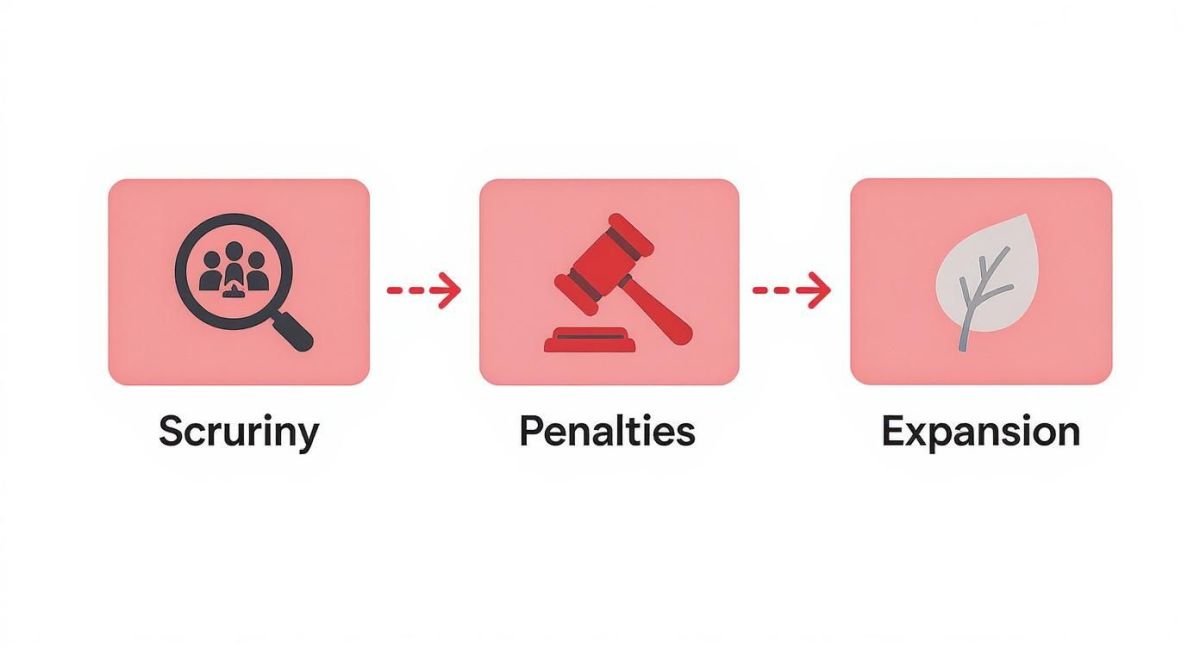
As you can see, it’s a clear progression from an initial look-over to serious penalties. This really drives home why having a proactive system in place from the get-go is so important.
Foundational Risk Assessment
First things first: you need to figure out exactly which regulations apply to you. This means doing a thorough risk assessment to see where your operations might cross paths with legal requirements, whether that’s in workplace health and safety, data privacy, or environmental standards. Never assume you know all the rules—you have to actively hunt them down.
Once you have a clear picture of the laws you need to follow, the real work begins. You have to translate them into steps your team can actually take. This is where so many businesses stumble, letting the rules get buried in complex legal documents. The aim here is to create simple, easy-to-follow guidelines that make sense to the people on the ground.
Developing Clear Policies and Procedures
With your risks mapped out, it's time to build the "walls" of your framework: your internal policies. These documents provide the structure and clarity everyone needs, and they should be written in plain, everyday language, cutting out the jargon wherever possible.
A great policy is much more than a document that gathers dust on a shelf; it’s a practical guide for your team. For instance, a policy for handling data should clearly outline:
- Data Classification: Simple rules on what counts as sensitive information.
- Access Controls: Who is allowed to see or change specific data sets.
- Breach Protocol: A step-by-step action plan for what to do if a data breach happens.
To make sure your framework is truly robust, especially in tech-heavy sectors, it's worth looking into how to perform Penetration Testing for SOC 2 and HIPAA Compliance. This kind of proactive testing helps you find weak spots before someone else does, making your whole security setup much stronger.
A successful framework isn't just about dodging fines. It's about building a culture where doing the right thing is second nature, empowering your team to make smart, compliant decisions instinctively.
It's also crucial to assign a clear owner for each policy. When someone is directly responsible for keeping a procedure up-to-date, it’s far less likely to become obsolete. This creates a clear line of accountability that strengthens your entire system. By putting in the effort to build this practical framework, you move beyond just ticking boxes and create a resilient culture that protects your business from the ground up.
Using Technology to Simplify Compliance

Trying to manage modern compliance with government regulations with spreadsheets is a bit like trying to fly a complex mission using an old paper map. You might get there eventually, but it's slow, full of risks, and you're bound to make a few mistakes along the way. Thankfully, technology—specifically Regulatory Technology, or RegTech—is now an essential co-pilot for any serious operator.
Think of these automated systems as your eyes and ears, constantly scanning the regulatory horizon. Instead of your team spending hours sifting through government websites and publications for updates, these platforms monitor new laws and amendments as they happen. You get instant alerts when a rule that impacts your operations changes, letting you stay ahead of the curve.
This isn't just about avoiding fines; it's about building a smarter, more resilient operation. By adopting the right tools, you can shift your team from constantly putting out fires to proactively managing risk.
Automating Key Compliance Tasks
The real magic of RegTech is how it handles the most tedious and repetitive compliance tasks. This frees up your best people to focus on strategy and growth, turning what was once a massive administrative headache into a streamlined process.
Here’s a look at how these tools can lighten the load:
- Automated Reporting: Imagine generating detailed compliance reports with a single click. These systems can pull data from every corner of your organisation, ensuring nothing gets overlooked.
- Risk Alerts: You can set up custom alerts that flag potential compliance breaches before they become major problems. This gives you precious time to correct your course.
- Centralised Documentation: Everything in one place. Your policies, flight logs, maintenance records, and training certificates are all organised, making audits far less stressful.
Technology transforms compliance from a static checklist into a dynamic, intelligent system. It helps you not only meet today’s rules but also anticipate tomorrow’s, creating a future-ready organisation.
Predicting Future Compliance Challenges
We’re now moving beyond simple automation. Artificial intelligence (AI) is helping operators predict compliance issues before they even surface. AI algorithms can dig through enormous datasets—from your own internal incident reports to global regulatory trends—and spot patterns a human observer would almost certainly miss.
This predictive power is a complete game-changer. What if you could get an alert about a potential operational risk in a specific area, based on a combination of changing weather patterns and newly passed local bylaws? This kind of foresight allows you to adjust your flight plans and procedures on the fly, keeping safety and compliance locked in.
It's all about making your compliance efforts smarter, not just faster.
Future-Proofing Your Compliance Strategy
The world of regulation never sits still. What keeps you compliant today might leave you exposed tomorrow. That's why your business needs a forward-thinking approach—one that anticipates change instead of just reacting to it. It’s about moving beyond a simple checklist and building a compliance program that’s genuinely agile.
Think of it as horizon scanning. You're constantly looking ahead, spotting the emerging trends that could reshape your legal duties. This proactive mindset is key to ensuring your compliance with government regulations isn't just current, but also tough enough for whatever comes next. By nurturing a culture of continuous improvement, your compliance framework becomes a living system that evolves right alongside the law.
Embracing Agile Compliance
An agile compliance program is one that can adapt to new rules without grinding your business to a halt. It’s built on flexible policies and procedures that are easy to update when things change. This really hinges on a commitment to ongoing education and having a clear system to communicate changes quickly across your entire team.
Just look at the Australian business landscape right now—it's always shifting. New laws around psychosocial hazards in the workplace are rolling out, putting a bigger focus on mental health and safety for every employer. At the same time, upcoming anti-money laundering reforms are set to expand the obligations for sectors like real estate and accounting. You can get more detail on these emerging compliance risks and their deadlines to make sure you’re prepared.
A future-proofed strategy isn't about predicting every new law with perfect accuracy. It's about building the institutional muscle to adapt swiftly and effectively, no matter what changes come your way.
Taking this approach means that when a new regulation does land, you already have the processes in place to figure out its impact and weave the new requirements into your operations smoothly. This not only keeps your business protected but also maintains continuity, turning what could be a major disruption into a manageable update. Your organisation doesn't just stay compliant; it becomes fundamentally more resilient.
Got Questions About Regulation Compliance? We've Got Answers
If you're wrestling with regulatory requirements, you're not alone. It's a common headache for business owners and compliance officers. Let's tackle some of the most frequent questions we hear.
Where on Earth Do I Start with All This?
The very first step is always a solid risk assessment. You need to figure out which regulations actually apply to your business. This means looking at everything – federal, state, and even local council rules – that touches your industry and specific operations.
Don't just guess or assume. Actively map out all your obligations, from workplace health and safety right through to data privacy. Getting this foundation right from the beginning means you won't waste time and effort on the wrong things.
The Rules Keep Changing. How Do I Keep Up?
This is a huge challenge, no doubt about it. The best way to handle it is to set up a system for continuous monitoring. Think of it as having your ear to the ground, all the time.
This could be as simple as subscribing to industry newsletters, or you could get more technical with RegTech software that sends you automated alerts. Some businesses even assign a person or a team to keep an eye on legislative updates. The main takeaway is that compliance with government regulations isn't a "set and forget" task; it's an ongoing process.
The real aim here isn't just to react when a new law drops, but to see it coming. When you're proactive, what could have been a major disruption becomes just another managed update, keeping your operations smooth and resilient.
What’s the Single Biggest Mistake I Could Make?
A surprisingly common blunder is creating policies that nobody can understand. If your procedures are full of legal jargon that doesn't make sense in the real world, people simply won't follow them.
Your compliance is only as good as the person on the ground implementing it. Make sure your rules are written in plain, simple language and are genuinely practical for the people who have to use them day in and day out.
At Innoflight International, we build our advanced unmanned aerial systems to meet stringent operational standards, helping you navigate complex regulatory environments with confidence. Explore our compliant drone solutions.