Kestrel
Lift with confidence.
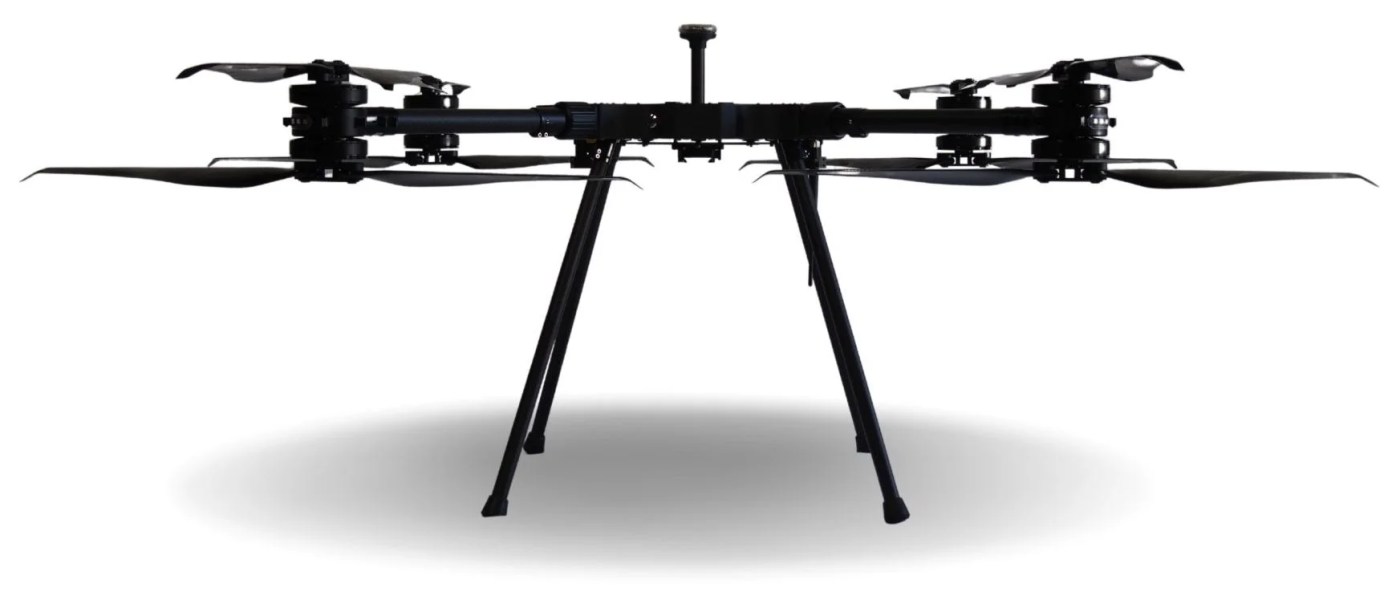
A rugged, heavy-lift UAV with coaxial motors and independent electronic speed controllers, designed to carry demanding professional payloads.
Start with your mission.
Choose your aircraft, payload and battery. See a modelled flight-time estimate and build a configuration brief.
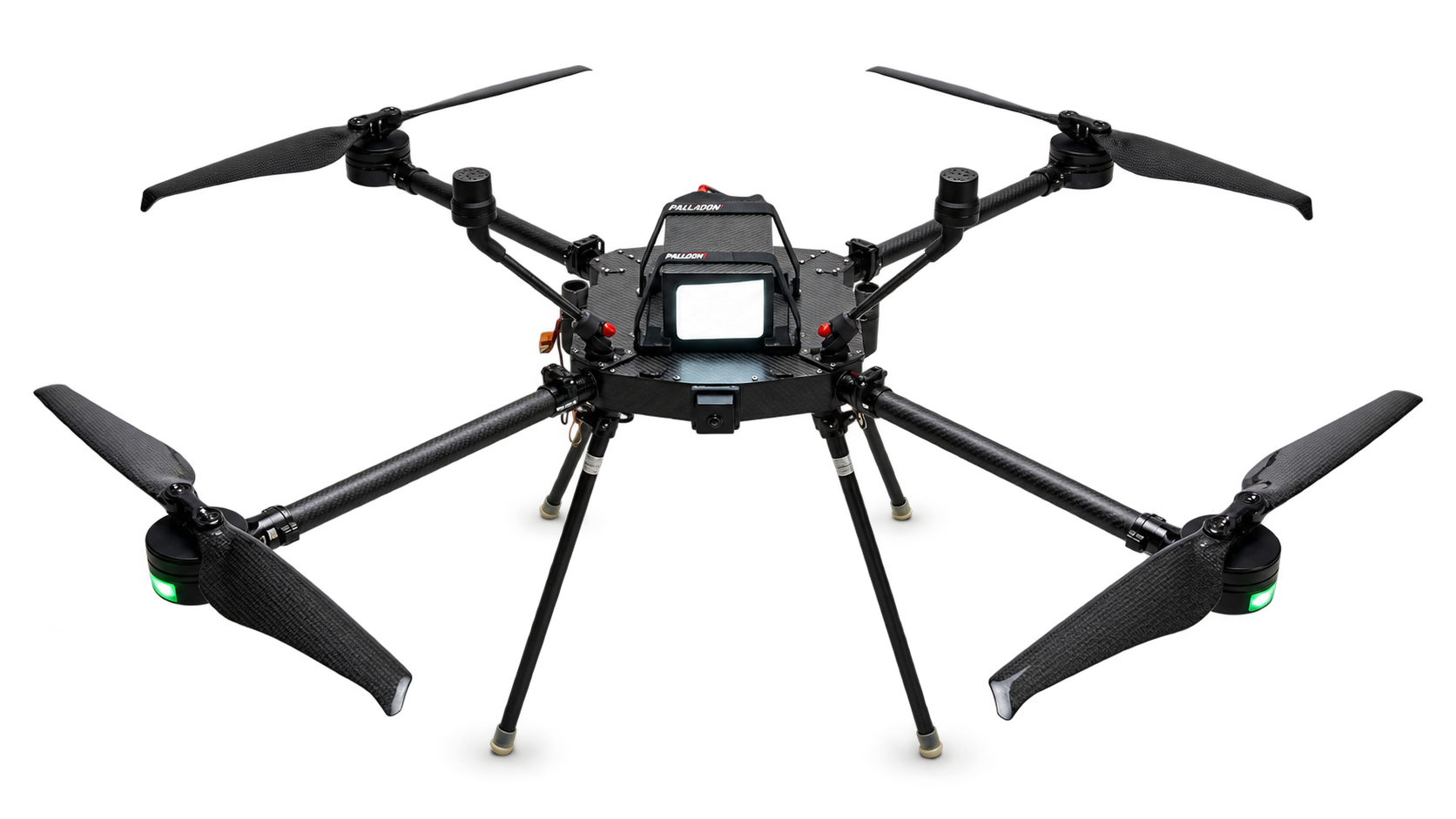
Patriot configuration
How this estimate is calculated
Based on Evolution Flight’s flight-performance model, using your selected aircraft, battery and payload. The calculator uses the efficient-cruise profile to estimate available mission minutes.
The calculator subtracts a fixed 10-minute battery reserve from the modelled flight time before displaying your mission minutes. This reserve model does not predict a landing voltage. Cruise efficiency is a modelling assumption, not a measured mission result.
Weight includes airframe, battery and entered payload. Powered sensors, wind, air density, battery health and flight manoeuvres may reduce endurance. Low-thrust estimates extrapolate below the bench measurements. Confirm your complete mission configuration with the team.
Modelled estimates, not guaranteed flight times. Your choices carry into the enquiry.
Capability that counts.
Designed for survey-grade LiDAR, cinema cameras and other professional sensors, the Kestrel pairs payload flexibility with a modular airframe and quick-connect mounting.
Independent propulsion
Each arm has two independent motors and controllers, providing propulsion redundancy.
Stability in wind
Coaxial propulsion helps maintain control and stability in turbulent conditions.
Modular in the field
Interchangeable arms make it easier to replace damaged components and get back to work.
Secure control
Encrypted data links, permission-only hardware pairing, and locally retained flight data.
Payload integration
A dampened quick-connect mount helps isolate vibration and makes payload changes simple.
The right payload changes everything.
Discuss a Kestrel configuration around the sensor, mounting, power and data interfaces you need.
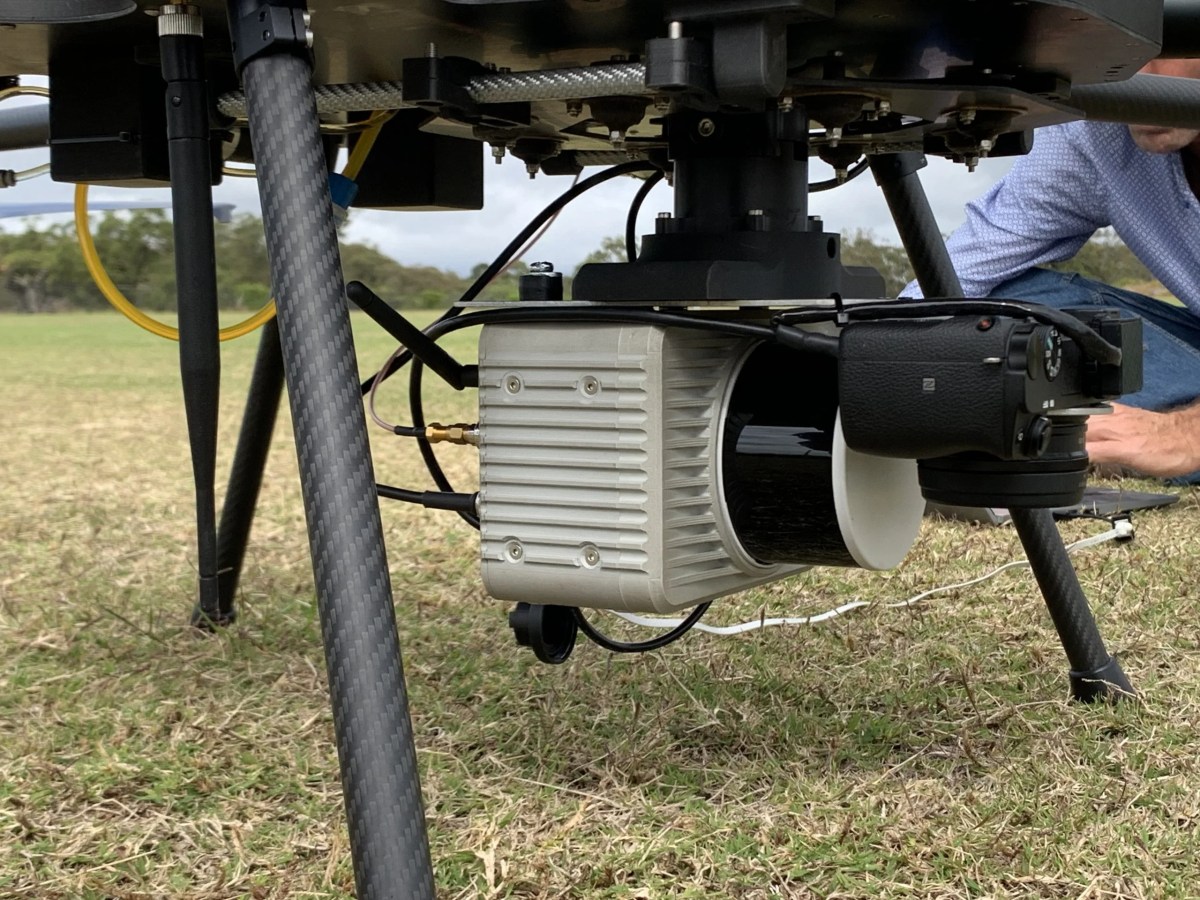
LiDAR systems
Explore sensors for aerial and ground-based mapping.
Camera & mapping workflows
Bring imaging, positioning and processing together.
Custom integration
Review mounting, power and data connections.
Payload compatibility is confirmed for each configuration. Archive imagery illustrates previous integration work.
Discuss your payloadKestrel specifications.
| Maximum payload | 10 kg |
|---|---|
| Maximum take-off weight | 25 kg |
| Flight-time estimates | Use the mission planner below; configuration dependent |
| Maximum tested wind | 36 km/h (10 m/s) |
| Rated wind tolerance | 25.2 km/h (7 m/s), ground level, no payload |
| Maximum survey speed | 12 m/s |
| Maximum flight speed | 15 m/s |
| Operating temperature | −10°C to 40°C, no payload |
| Airframe without battery or payload | 11.45 kg |
| Battery options | 40 Ah · 4.7 kg / 52 Ah · 5.2 kg; model assumes 12S |
Published figures vary with payload, batteries, accessories, environment and operating reserves. Endurance ranges do not represent flight time at maximum payload. Reference PDFs may cover earlier configurations. Confirm the current mission specification with our team.
Keep your operation moving.
Find documentation, discuss training and get help from the Evolution Flight team.
A few useful answers.
How do I choose a payload?
Share the sensor model, total weight, dimensions, power needs and data interfaces. We will review the mounting and aircraft configuration with you.
How long will it fly with my payload?
Endurance depends on the complete configuration, flight profile, conditions and reserve requirements. Ask for a mission-specific estimate; the published endurance range is not a claim at maximum payload.
Where can I get documentation and support?
Use the specification download below, browse our training resources, or contact the existing customer support desk for your system.
Let’s talk Kestrel.
Tell us your application, payload and operating environment.
Discuss Kestrel