
Australian manufacturing isn't what it used to be. The image of old-school factories with endless assembly lines has been replaced by something far more dynamic and high-tech. Today, it’s a critical pillar of our national economy, driven by smart technology and specialised skills to create high-value products that are shaping Australia's future.
This shift from traditional production to advanced workshops is opening up exciting new doors for local innovation and growth.
The State of Australian Manufacturing Today
If you still picture Australian manufacturing as a story of conveyor belts and mass production, it's time for an update. The sector has completely transformed, moving away from large-scale, low-margin goods to focus on specialised, high-value products where ingenuity and quality are the name of the game.
Think of it less like a sprawling factory and more like a high-tech lab. Here, skilled technicians and engineers work with sophisticated robotics and smart systems. They're building everything from life-saving medical devices and complex aerospace components to the premium food and beverages we export to the world. It’s a whole new ball game.
A Pillar of the National Economy
The industry's importance goes far beyond the factory floor; it's a cornerstone of the entire Australian economy. It acts as a powerful engine for jobs and investment, and the numbers speak for themselves.
As the nation's sixth-largest industry, Australian manufacturing directly employs around 930,000 people. That’s a massive workforce of skilled Aussies supporting communities right across the country.
But its economic punch is even bigger than that. The sector generates about $137 billion in value-added output each year. And while manufacturing makes up roughly 5.1% of Australia's GDP, it accounts for a disproportionately large 12.4% of our exports and 7.9% of capital investment. It’s clear it punches well above its weight. You can read the full research on its economic contributions to get the complete picture.
Responding to Global Shifts
The supply chain chaos of the last few years has been a stark reminder of why we need strong local production. Australia manufacturer are rising to the challenge, making a powerful case for onshoring and bolstering our sovereign capability. Bringing production back home offers some serious advantages:
- Better Resilience: When we make more things here, we’re less exposed to global shocks and shipping disruptions.
- Tighter Quality Control: Keeping production local, like Innoflight International is doing with more of its drone components, means you can keep a close eye on quality and innovate much faster.
- More Local Jobs: Investing in manufacturing doesn't just create factory jobs. It fuels growth in supporting industries like logistics, raw material supply, and local services.
The modern Australian manufacturing scene is all about being adaptable, embracing new tech, and understanding its strategic value. It's an industry that isn't just surviving; it's actively building a more secure and prosperous future for the nation.
How Manufacturers Are Navigating Today's Economic Headwinds
Running a manufacturing business in Australia right now can feel like trying to navigate a ship through a perfect storm. You're constantly up against a barrage of economic pressures, from stubborn inflation and critical skill shortages to the ever-shifting tides of global markets.
To get through this, you need to do more than just keep your head above water. It demands sharp, strategic thinking and a willingness to adapt. Companies are having to find clever ways to manage skyrocketing material and energy costs while holding onto the resilience that has always defined this industry. This isn't just about survival—it's about evolving to thrive, no matter the odds.
And despite these hurdles, the sector is showing remarkable strength. Recent data paints a picture of resilience and even growth, proving that Aussie manufacturers are successfully steering through the turbulence.
Adapting to New Economic Realities
One of the most pressing challenges is getting a handle on rising operational costs. Everything from raw materials to the power bill has become more expensive, putting the squeeze on profit margins and forcing businesses to get creative. The smartest manufacturers aren't just taking these costs on the chin; they're actively finding ways to push back.
A huge part of this involves tightening up internal processes, especially by implementing effective inventory management strategies. By getting a better grip on their supply chains and cutting down on waste, companies can unlock significant savings and boost their overall efficiency. It's a proactive move that protects the bottom line and keeps them competitive.
On top of that, investing in energy-efficient machinery is no longer a "nice-to-have"—it's a core business strategy. These investments pay off in two ways: they slash those crippling energy bills and also tick the box for growing consumer and regulatory demands for sustainability. It’s a practical solution to a persistent economic headache.
The Ongoing Hunt for Skilled Talent
Another major headwind is the persistent shortage of skilled labour. As manufacturing gets more high-tech, the demand for people with expertise in robotics, data analysis, and advanced machinery has shot past the available supply. This skills gap can really slow down production and make it tough for a company to bring in new technologies.
To get around this, forward-thinking manufacturers are taking matters into their own hands. They're investing heavily in:
- Internal Training Programs: Upskilling current employees is a great way to fill high-demand roles while keeping a loyal, knowledgeable workforce.
- Apprenticeships and Traineeships: Building a pipeline of future talent by partnering with TAFEs and other vocational institutions helps train the next generation of manufacturing pros.
- Smart Automation: Bringing in robotic systems and automated processes for repetitive or labour-intensive jobs frees up human workers for more complex, high-value roles.
These strategies are vital for building a workforce that can handle the sophisticated operations of a modern manufacturing business, setting it up for long-term stability and growth.
A Sector Showing Its True Grit
Even in this tough economic climate, Australian manufacturing isn't just holding on; in many areas, it's actually expanding. This resilience is a testament to the innovative and adaptive spirit of the businesses in this sector. By focusing on high-value niches, embracing technology, and strengthening local supply chains, manufacturers are paving a path to success.
The ability to pivot quickly, whether it's in response to a supply chain disruption or a sudden shift in consumer demand, has become the hallmark of the industry's strongest players.
This adaptability is showing up in the numbers, which point to a sector on the upswing. The data tells a story of increasing output and growing confidence, fired up by strong domestic demand and new opportunities in export markets.
One of the clearest signs of this positive momentum is the S&P Global Manufacturing Purchasing Managers' Index (PMI). The index recently hit 53 points, a solid jump from 51.3 and the fastest rate of expansion in years. This marks eight straight months of sustained growth, showcasing the sector's robust performance. Since any PMI reading over 50 indicates expansion, this rising figure points directly to increased output, backed by strong new orders from both local customers and key export markets like the US, Europe, and the Asia-Pacific. You can explore more about this manufacturing expansion on Trading Economics.
Government Initiatives Driving Innovation
The Australian government isn't just sitting back and letting the market decide the fate of local industry. It's actively getting involved, much like a strategic investor, by injecting support into high-potential sectors to ensure they can compete on the world stage.
This isn't about handouts. It's about targeted programs designed to spark the next big thing in Australian manufacturing. By focusing on critical areas like clean energy, defence, and advanced technologies, these initiatives are building a more resilient and self-sufficient industrial base—a true partnership between government and business.
The chart below shows just how much local manufacturing relies on a strong domestic market versus exports.
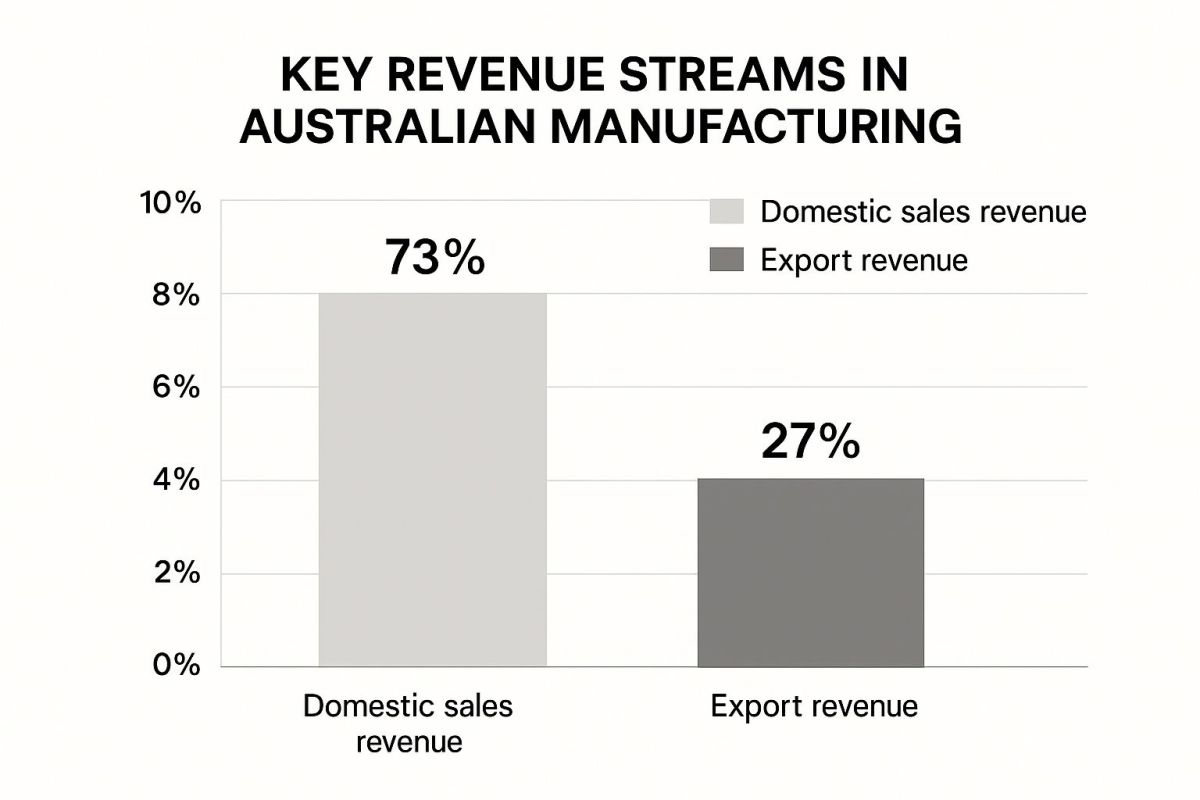
As you can see, while exports are a healthy part of the picture, the local market is where most of the action is. This really drives home why a robust national economy is so crucial for the sector's overall health.
Strategic Funding For National Priorities
To make this vision a reality, the government is putting serious money on the table. The goal isn't to prop up yesterday's industries but to invest in the technologies and skills that will define tomorrow. It's a clear move to secure Australia's economic future and create quality, high-skill jobs.
Over the next ten years, grant funding for manufacturing is set to hit approximately $22.7 billion. This huge investment is specifically targeted at priority areas.
To get a clearer picture of where this money is going, here’s a breakdown of the key government investment areas in Australian manufacturing.
Key Government Investment Areas in Australian Manufacturing
This table summarises the major funding commitments aimed at boosting innovation and growth in strategic sectors.
| Priority Sector | Allocated Funding | Strategic Goal |
|---|---|---|
| Hydrogen Production | $8 billion | Position Australia as a global leader in green hydrogen energy. |
| Battery Manufacturing | $549 million | Develop a domestic battery supply chain for energy storage and EVs. |
| Aluminium Sector | $2 billion | Secure and modernise the aluminium industry for a low-carbon future. |
These significant financial commitments send a clear signal: Australian manufacturing is a national priority. This creates a stable and encouraging environment for businesses to plan for the long haul and chase ambitious projects.
Fostering a Culture of Research and Development
Beyond just cash injections, the government is also focused on nurturing a strong culture of innovation. The aim is to make it less risky and more rewarding for companies to pour resources into the kind of research and development (R&D) that leads to game-changing products and smarter processes.
This support is a lifeline for small and medium-sized enterprises (SMEs), which are often hotbeds of brilliant ideas but lack the deep pockets to see them through. Key programs include:
- R&D Tax Incentive: This offers a tax offset that makes it financially viable for companies to undertake R&D projects they otherwise couldn't afford.
- Cooperative Research Centres (CRCs): These centres act as a bridge between university labs and factory floors, bringing researchers and industry experts together to solve real-world problems.
- Industry Growth Centres: Acting as hubs for six key sectors, they provide expert advice and help businesses connect, grow, and tap into new markets.
Together, these initiatives create an ecosystem where great ideas don't just stay on the drawing board—they get the support they need to become market-ready products.
Building Sovereign Capability Through Local Production
A major theme underpinning all these policies is the push for sovereign capability. In simple terms, this means making sure Australia can produce critical goods and technologies right here at home. It’s about reducing our dependence on shaky global supply chains, especially for things vital to our national security and well-being.
This focus isn't just about economics; it's about national resilience. By investing in local manufacturing, especially in areas like defence and medical supplies, Australia is shoring up its ability to handle global crises without being left vulnerable.
This national priority opens up huge opportunities for companies that can step up to the plate. For example, businesses skilled in advanced production methods are perfectly placed to benefit. You can see how Innoflight International is at the forefront of additive manufacturing, a technology that is central to building this kind of capability. By prioritising onshore production, the government is strengthening the entire industrial backbone of the country for generations to come.
The Tech Revolutionising Australian Factories
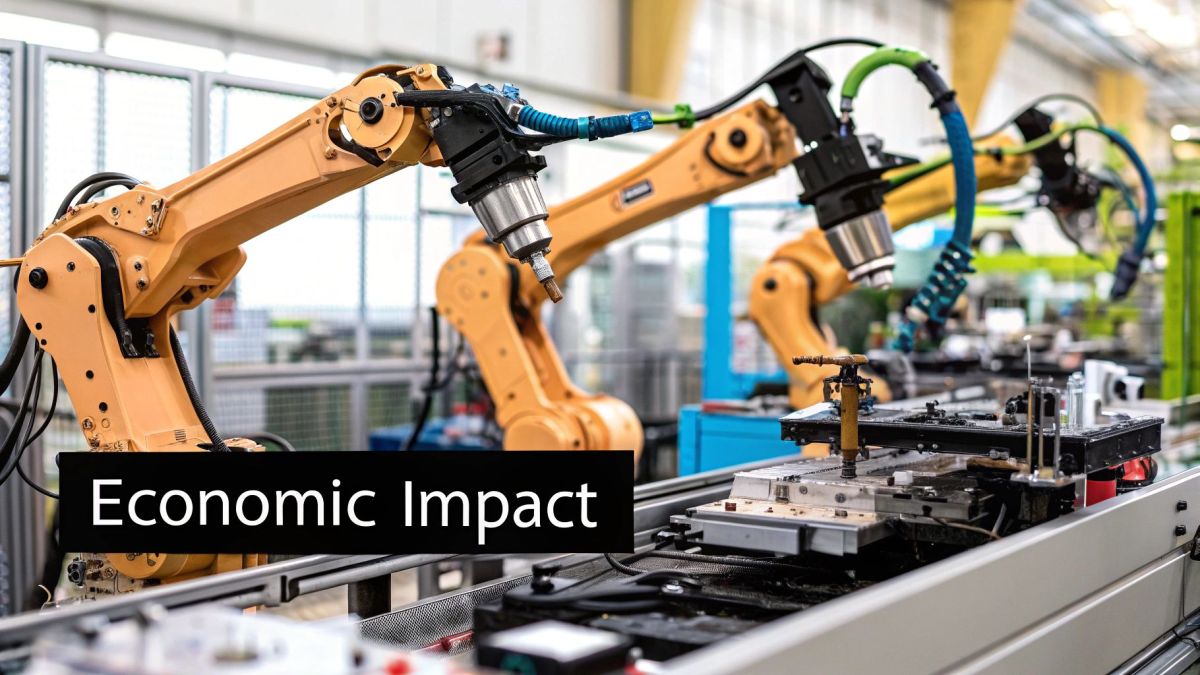
If you step inside a modern Australian factory today, you might be surprised. It looks less like a traditional production line and more like a high-tech lab. The old days of purely mechanical, clunky processes are well and truly behind us.
The most competitive manufacturers are now driven by a powerful trio of technologies working together.
Think of the factory as a living thing. Internet of Things (IoT) sensors are its nervous system, collecting real-time data from every piece of equipment. Artificial Intelligence (AI) is the brain, crunching all that information to spot patterns and make smart calls. And robotics? They’re the tireless, precise hands, carrying out complex jobs with pinpoint accuracy.
This isn’t some far-off future; it's what’s happening right now in Australian manufacturing. By weaving these tools together, local companies are reaching new heights of efficiency and quality, completely changing what it means to build things in Australia.
The Power of Predictive Maintenance
One of the biggest game-changers is the shift from reactive to predictive maintenance. For years, the standard practice was to either fix a machine after it broke down (disaster!) or service it on a strict schedule, often wasting time and money on parts that were still perfectly good.
IoT sensors flip that model on its head. By constantly monitoring things like vibration, temperature, and output, they can pick up on tiny signs of trouble long before a catastrophic failure.
The AI brain takes that data and predicts exactly when a part will need attention. This means maintenance can be scheduled for planned downtime, avoiding those costly, production-halting shutdowns that can throw a whole operation into chaos.
This proactive approach doesn’t just save a fortune; it also makes expensive machinery last longer, leading to a much more reliable and sustainable factory floor.
Achieving Superior Quality Control
Keeping quality consistent is one of the toughest gigs in manufacturing. A tiny human error or a machine drifting slightly out of spec can lead to defects, waste, and, worst of all, unhappy customers. This is where technology offers a brilliant solution.
AI-powered visual inspection systems use high-res cameras to scan products as they move down the line, working with a speed and precision that’s simply superhuman. These systems can spot microscopic flaws, slight misalignments, or colour variations that the human eye would miss nine times out of ten.
Because it works 24/7, this automated quality control ensures every single item meets the exact same high standard. The end result is a massive drop in waste and a bulletproof reputation for quality—something you absolutely need to compete globally.
The Rise of Digital Twins
Perhaps the most mind-bending advancement is the concept of a “digital twin.” Imagine a perfect virtual copy of a physical factory, a single machine, or even an entire production process, all built with live data streaming in from IoT sensors.
This isn't just a static 3D model. It’s a living, breathing replica of its real-world counterpart. With a digital twin, engineers can:
- Test New Processes Safely: Thinking of changing the factory layout? Try it in the virtual world first. You can iron out all the kinks without disrupting the actual factory floor for a single minute.
- Simulate Stresses: You can push virtual equipment to its limits to see how it performs under extreme conditions, finding weak spots before they become real-world problems.
- Train Staff: New team members can learn how to operate complex machinery on the virtual version, getting up to speed in a completely safe and controlled environment.
This ability to experiment and perfect things in a risk-free virtual space is a massive boost for innovation. It gives companies the confidence to try bold new ideas without the huge costs and risks. As production methods evolve, a technical comparison of subtractive vs. additive manufacturing helps put these new capabilities into context. At Innoflight, for example, we’re increasingly manufacturing drone components in the USA and Australia, and this kind of tech is what makes it possible to do so efficiently and at scale.
Why Onshoring Is the Future for Australian Tech
Recent global disruptions have taught us a hard lesson about the real cost of relying too heavily on overseas supply chains. For years, the standard playbook for many tech companies was to offshore production to cut costs. But that strategy has started to backfire, exposing serious cracks in everything from quality control and IP protection to simply getting things done on time.
This has sparked a major rethink and a powerful shift toward onshoring—that is, bringing manufacturing back home to Australia. It’s not just about reshuffling logistics; it's a fundamental change in strategy. At Innoflight, now more than ever, we are manufacturing parts for our drones internally in the USA and Australia, reflecting a broader industry move to build sovereign capability and regain control.
For high-stakes sectors like defence and aerospace, the case for onshoring is undeniable. It's about building an innovative, secure, and resilient industrial base on our own soil.
Securing Your Designs and Guaranteeing Quality
When your company’s entire value is built on unique designs and proprietary tech, sending those blueprints to the other side of the world is a huge gamble. The threat of intellectual property (IP) theft is a real and constant worry in many offshore manufacturing hubs. By bringing production in-house, Australian companies can put a lock on their most valuable assets.
This proximity also delivers a massive jump in quality. Think about it: an engineer can literally walk onto the factory floor to work directly with the production team.
This hands-on collaboration allows for instant feedback and quick adjustments, completely eliminating the long and often frustrating communication delays that plague overseas partnerships. Problems get spotted and solved in hours, not weeks.
This tight loop between design and production ensures every component meets the exact specifications needed for high-performance systems like commercial drones—a non-negotiable in our world.
Speeding Up Innovation and Development
In the tech game, speed is everything. The old model of designing in Australia, prototyping in Asia, and assembling somewhere else creates massive delays. Onshoring collapses that entire drawn-out process, creating a dynamic environment where innovation can happen fast.
Having the whole process under one roof creates what we call a 'tight feedback loop.'
- Rapid Prototyping: New ideas can be tested, built, and refined almost on the spot. This slashes the development timeline for new products.
- Continuous Improvement: The people building the product can give real-time feedback to engineers, helping make designs more robust and efficient.
- Fast Customisation: Responding to a client's specific needs with custom modifications becomes much quicker and more practical.
This faster cycle is a huge competitive advantage. It lets Australian companies react quickly to market changes and stay a step ahead of global competitors. To see what’s out there, it’s worth taking a closer look when you buy directly from a commercial UAV manufacturer.
Building National Resilience and Sovereign Capability
The move to onshore manufacturing goes beyond simple business sense; it’s a matter of national importance. When you’re talking about critical technologies used in defence, emergency services, and infrastructure, relying on foreign supply chains is a strategic vulnerability.
By building drone components and other vital technologies in Australia, companies like Innoflight are making a direct contribution to our nation's sovereign capability. This means developing the local skills, infrastructure, and industrial muscle to produce what we need, right when we need it, without being dependent on other countries.
This strengthens our entire local ecosystem. It creates high-skill jobs, nurtures Australian expertise, and drives growth in supporting industries. Every component made on our shores is another step toward a more self-reliant and secure future—one where our commercial goals and national interests go hand in hand. This strategic focus is what will define the next chapter of successful Australian manufacturing.
Growth Opportunities in Australian Manufacturing
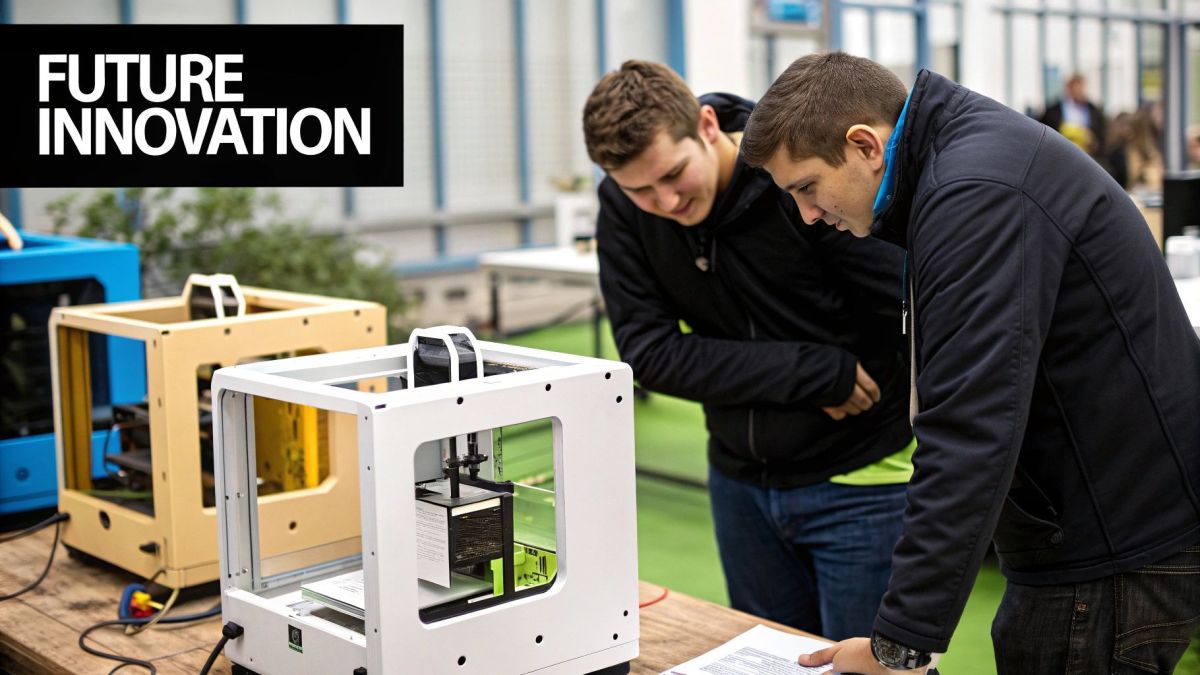
So, what does the future hold for manufacturing in Australia? Let’s be clear: the road ahead isn’t about trying to out-muscle global giants in low-cost, mass production. That ship has sailed. The real opportunity is to become a leader in specialised, high-value markets where innovation, quality, and precision are what really matter.
This strategic shift is already happening. We're seeing companies pivot towards complex products for demanding sectors like aerospace, medical technology, and defence. A perfect example is the growing trend of bringing drone component production back onshore. This move shows local firms are serious about building sovereign capability and meeting incredibly strict quality standards. To see who’s at the forefront, take a look at the leading Australian drone manufacturers really making a name for themselves.
Embracing Sustainability and Circular Economies
One of the most promising growth areas is sustainable manufacturing. With the whole world pushing for greener products, Australian businesses have a golden opportunity to lead the way in environmentally responsible production. This goes far beyond just reducing a factory's carbon footprint; it's about completely rethinking a product's entire life, from cradle to grave and back again.
At the heart of this change is the idea of a circular economy. It’s a move away from the old "take, make, dispose" mindset. Instead, the focus is on creating closed-loop systems where materials are constantly reused, repaired, and recycled.
This approach flips the script entirely, turning waste from a costly problem into a valuable asset. It unlocks new business models built around product longevity, remanufacturing, and material recovery, delivering huge environmental and economic wins for Australia's manufacturing sector.
Cultivating a High-Skilled Workforce
Of course, this bright future hinges on our most critical resource: our people. Moving to advanced, sustainable manufacturing demands a workforce with serious technical chops. Robots and AI are great for the repetitive stuff, but we need highly trained technicians, engineers, and data scientists to design, manage, and fine-tune these complex systems.
That means investing in skills development isn't just a good idea—it's absolutely essential for growth. This involves a few key things:
- Modernising Apprenticeships: We need to update training programs to include skills in automation, data analytics, and green technologies.
- Industry-University Partnerships: Fostering strong collaborations ensures graduates walk out with practical, real-world skills they can use on day one.
- Continuous Upskilling: The pace of change is relentless, so providing ongoing training for the existing workforce is crucial to keep everyone's skills sharp.
By building a deep pool of talent, Australian manufacturing can cement its place as a global leader in smart, strategic, high-value production. The outlook is genuinely strong, pointing to a sector powered by home-grown innovation and resilience.
Frequently Asked Questions
Diving into Australian manufacturing often sparks a few questions. Here are some straightforward answers to the things people commonly ask, helping to clarify the industry's direction, its challenges, and the exciting opportunities ahead.
What Is Advanced Manufacturing in Australia?
Forget the old image of repetitive assembly lines. Advanced manufacturing is about using smart technology to create high-value, complex products. It's the brains of the industry, where things like robotics, AI, data analytics, and new materials all come together.
This approach lets Australian companies build sophisticated gear for sectors like aerospace, medical devices, and defence. The focus shifts from churning out huge volumes to creating world-class products built on quality and innovation.
Why Is Onshoring So Important for Australian Manufacturing?
Onshoring simply means bringing production back home to Australia, and it’s a big deal for a few key reasons. First, it makes our country more self-reliant by cutting our dependence on shaky global supply chains for essential goods.
For businesses, it means having direct oversight of quality control, keeping intellectual property safe, and being able to develop new ideas much faster. At Innoflight, for example, we're making more and more of our drone parts in the USA and Australia. It guarantees top-tier quality and lets us speed up our design and testing cycles.
This move to local production isn't just a business trend. It's a strategic play to build up our sovereign capability, making sure Australia can produce what it needs, right when it needs it.
What Are the Main Challenges Facing the Industry?
Australian manufacturing isn't without its hurdles. There's a persistent shortage of skilled workers, especially in high-tech roles, which can really slow down growth and the adoption of new tech.
On top of that, high energy and running costs squeeze profit margins, pushing companies to be smarter and more efficient. To stay competitive on the world stage, businesses have to invest strategically in both their people and their technology.
Where Are the Biggest Growth Opportunities?
The future for Australian manufacturing is in specialised, high-value markets. The real action is happening in a few key areas:
- Sustainable Manufacturing: Creating products and processes for the circular economy, where waste is turned back into something useful.
- Defence and Aerospace: Building the critical components and systems that support our national security and self-reliance.
- Medical Technology: Designing innovative devices and medicines that meet global health challenges.
- Advanced Food and Beverage: Using technology to create premium food and drinks for export markets that demand the best.
At Innoflight International, we are committed to designing advanced UAS solutions in Australia and manufacturing them in the USA and Australia. Discover our range of Australian-designed, USA- and Australian-manufactured drones and see how we support critical industries.