If you're in the commercial drone industry, the Commercial UAV Expo is the event you can't afford to miss. It's the central gathering for thousands of professionals from all corners of the globe, pulling in nearly 4,000 attendees and over 220 vendors to talk all things drones.
What's the Commercial UAV Expo All About?

Think of the Commercial UAV Expo less like a standard conference and more like the industry's annual family reunion. It's where the tech-builders connect with the people putting that tech to work in the field. This is the place where genuine problems meet innovative solutions.
The event’s goal is simple: push the commercial drone market forward. It achieves this by creating an environment where people can learn from each other, forge partnerships, and discover new ways of working. People don't just come to look at shiny new drones; they're here to find practical answers to their biggest operational headaches, whether they're in construction, energy, or public safety.
Who Should Attend?
The crowd is a real mix of industry players. You'll be rubbing shoulders with everyone from asset owners who manage massive infrastructure projects to the software gurus developing the next big thing in data processing. It's built for professionals who are serious about using drones to make their operations safer, more efficient, and more accurate.
You’ll find a lot of different people walking the floor, including:
- Project Managers from construction and engineering, looking for better ways to keep an eye on site progress.
- Surveyors and GIS Professionals on the hunt for top-tier mapping and LiDAR tech.
- Asset Inspectors from the energy and utilities sectors, who are tasked with keeping power lines, pipelines, and other critical infrastructure in check.
- Public Safety Officials, like police and emergency crews, who rely on drones for everything from situational awareness to search and rescue.
This unique blend of attendees keeps the conversations grounded. It's all about what actually works in the real world, not just what sounds good on paper.
What Are the Main Highlights?
The expo is really built on three core experiences that everyone can get something out of. First up is the massive exhibition hall. This is where hundreds of companies show off the latest and greatest in drone hardware, sensors, and software. It's your chance to get a hands-on feel for new gear and chat directly with the people who designed it.
Then there's the conference program, packed with sessions from genuine industry experts. These talks dig deep into everything that matters right now, from the latest regulatory changes and BVLOS (Beyond Visual Line of Sight) operations to advanced data analytics.
The expo fosters a vital connection between academia and industry, reinforcing the mission to produce skilled, forward-thinking UAS professionals ready to navigate complex airspace management challenges.
Finally, you have the live flying demonstrations and special areas like the Indoor Airspace. This is where you get to see the drones in action. Watching a system perform a real-world task tells you so much more than a spec sheet ever could. Put together, these three elements make the Commercial UAV Expo an absolutely essential event for anyone serious about the business of drones.
Industries and Applications Taking Centre Stage
The Commercial UAV Expo is much more than just a shiny showcase of new hardware. It’s a living, breathing demonstration of how entire industries are being reshaped from the sky down. Forget just listing sectors; let's talk about the real-world problems being solved by the tech you'll see on the exhibition floor.
These applications are the practical, money-saving, and safety-boosting reasons that bring thousands of professionals through the doors every year. This isn't about gadgets; it's about getting the job done better.
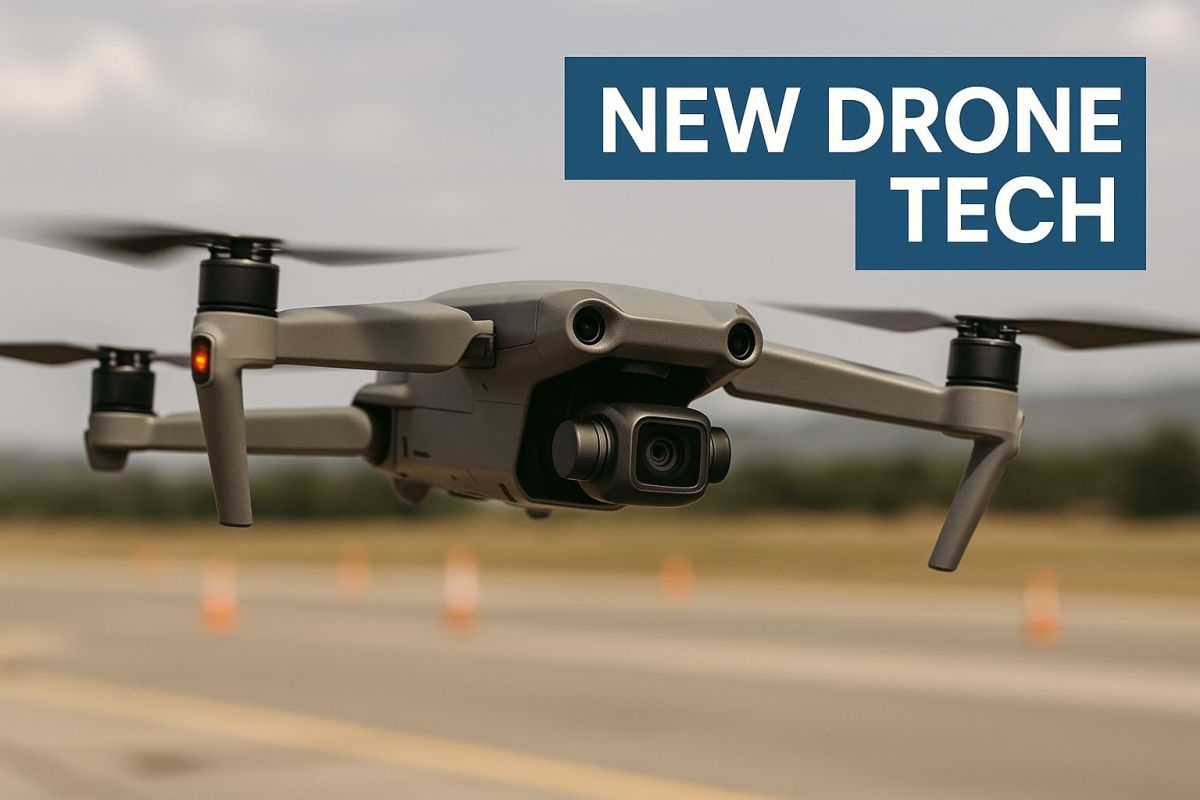
This focus on new technology really highlights the rapid jumps we're seeing in sensors, software, and drone designs that are fuelling these massive industry shifts.
Construction and Surveying
For anyone in construction or surveying, drones have quickly moved from a "nice-to-have" to an indispensable part of the toolkit. Picture a massive construction project as a complex, always-moving puzzle. In the past, tracking progress meant slow, manual surveys that gave you, at best, a single snapshot in time.
Now, automated drone flights can map an entire site in a few hours, not days. This generates detailed 3D models that project managers use to monitor progress, check work against the original plans, and catch costly mistakes before they become big problems. It's the difference between guessing and knowing.
The real game-changer isn't the drone itself, but the constant stream of high-quality data it delivers. This flow of information helps teams make smarter, faster decisions at every stage of a project.
It's a similar story in surveying. Drones carrying LiDAR or photogrammetry sensors can produce topographic maps with incredible accuracy. This is vital for everything from initial site planning to calculating earthworks volumes. For professionals in these fields, looking into the latest in long-range commercial UAV surveying can unlock huge efficiencies, especially on large-scale jobs.
Energy and Utilities
The energy sector operates on a staggering scale, managing thousands of kilometres of power lines, vast solar farms, and massive wind turbines. Inspecting all this infrastructure the old way is not just slow and expensive—it's incredibly dangerous for work crews.
Drones have completely flipped this script. A UAV with a thermal camera can fly along a power line and spot a failing component—a "hot spot" invisible to the naked eye. This allows for predictive maintenance, meaning utilities can fix a problem before it causes a power outage.
For wind turbines, drones can carry out detailed blade inspections in a fraction of the time it would take a rope access team. They capture high-resolution images of tiny cracks or defects without a single person having to leave the ground.
The table below breaks down how drones are being put to work across some of the key industries you'll see represented at the expo.
UAV Applications by Key Industry at the Expo
| Industry Sector | Primary Applications | Key Technologies to Watch |
|---|---|---|
| Construction | Site mapping, progress monitoring, stockpile measurement, safety compliance | LiDAR sensors, photogrammetry software, RTK/PPK for survey-grade accuracy |
| Energy & Utilities | Power line inspection, wind turbine blade analysis, solar panel thermography | Thermal imaging cameras, high-zoom optical sensors, autonomous flight platforms |
| Agriculture | Crop health monitoring, precision spraying, yield estimation, livestock tracking | Multispectral and hyperspectral sensors, drone-in-a-box systems, AI-powered analytics |
| Mining | Stockpile volume calculation, haul road mapping, high-wall stability monitoring | Heavy-lift drones, advanced photogrammetry, gas detection sensors |
| Public Safety | Search and rescue, fire scene mapping (hotspot detection), accident reconstruction | Thermal cameras, powerful zoom lenses, deployable tethered drones |
This is just a snapshot, of course. The real magic happens when you see these technologies in action and talk to the people building and using them.
Agriculture and Mining
In agriculture, drones are the driving force behind precision farming. Instead of treating a huge field as one uniform block, drones with multispectral sensors can pinpoint specific areas that need more water, fertiliser, or pest control. This targeted approach saves money, boosts crop yields, and is much better for the environment.
Mining operations are seeing similar gains in efficiency. Figuring out the volume of a stockpile used to be a time-consuming and often inaccurate guess. Now, a quick drone flight creates a precise 3D model, giving operators exact inventory data in minutes. Drones also make sites safer by monitoring high-wall stability and mapping out haul roads.
Public Safety and Emergency Response
When disaster strikes, knowing what's happening on the ground is everything. Drones give first responders an immediate eye in the sky, a crucial advantage during fires, floods, or search and rescue operations.
A drone can map an incident scene, identify hotspots in a fire, or find a missing person in rugged terrain far quicker than ground crews ever could. This rapid aerial intelligence helps commanders make informed decisions that save lives and protect property. It's a fundamental change in how emergency situations are managed.
This widespread adoption is clearly reflected in the market's growth. The Australian commercial UAV market was valued at about USD 772 million in 2023 and is projected to hit approximately USD 2.09 billion by 2032, all driven by these very applications. You can dig into more data on this expansion from Allied Market Research.
Making Sense of the Conference Program and Sessions
The educational program is the real heart and soul of the Commercial UAV Expo. Let's be honest, though—diving into the agenda for the first time can feel like trying to drink from a fire hose. With dozens of sessions, keynotes, and deep-dive technical talks all vying for your attention, you absolutely need a game plan. Think of this as your roadmap to building a learning experience that tackles your specific professional challenges head-on.
This isn't just a string of lectures. The conference is a carefully curated program built to deliver practical, no-nonsense education. The sessions are packed with real-world case studies and zero in on the topics that everyone is talking about right now: the latest regulatory updates, Beyond Visual Line of Sight (BVLOS) operations, autonomy, and the ever-growing role of AI in processing drone data.
Build Your Own Learning Path
The secret to conquering the agenda is to start with your goals. What are you trying to achieve? Are you here to solve a specific problem, like nailing down survey accuracy? Maybe you're exploring a new service to offer clients, like thermal inspections. Or perhaps you're just trying to get a handle on future regulations to help steer your company's five-year plan.
Once you know your "why," you can filter the program to find the sessions that speak directly to you. The expo organises its talks into clear tracks, usually tailored to different jobs and industries.
- For Surveyors and GIS Professionals: Keep an eye out for sessions on LiDAR data processing, achieving survey-grade accuracy with RTK/PPK, and new photogrammetry workflows.
- For Asset Inspectors in Energy: Pinpoint talks that cover thermal imaging for predictive maintenance, large-scale infrastructure inspection, and how to operate in tough environments.
- For Public Safety Officials: Focus on presentations about using drones in search and rescue, mapping incident scenes, and the best ways to integrate UAS into emergency response.
- For Project Managers: Hunt down the sessions on scaling a drone program, calculating ROI, and managing the mountains of data you collect on-site.
This targeted approach means you spend your time soaking up information you can actually use back at the office, instead of sitting through talks that don't apply to your work.
Juggling Sessions and the Show Floor
One of the classic rookie mistakes at any expo is getting so bogged down in conference sessions that you forget about the exhibit hall. It's a real balancing act. You don't want to miss the chance to get your hands on the technology everyone's talking about.
A simple but effective strategy is to pick your "must-see" sessions first—the non-negotiables. Put those in your calendar. Then, block out dedicated time slots specifically for walking the show floor. Treat these appointments with the same importance as a meeting with a new client. It’s the only way to avoid that frantic, last-hour rush through the aisles.
The smartest attendees see the conference program and the exhibit hall as two sides of the same coin. The sessions give you the 'why' and the 'how,' while the show floor provides the 'what'—the actual tools to get the job done.
With so much information coming at you, it’s easy to forget a brilliant idea or a key statistic. To keep everything straight, you might want to look into using AI summary tools for conference talks. They can be a massive help in boiling down the most important takeaways from each session you attend.
By creating a plan that blends structured learning with hands-on exploration, you'll walk away with a complete picture of where the industry is heading. You'll be able to connect the dots between a problem you heard about in a session and a solution you can see, touch, and discuss on the exhibit floor. That's a powerful advantage to take back to your team.
Meeting the Exhibitors and Tech Innovators
The exhibit hall at the Commercial UAV Expo is where the real magic happens. After you've spent time in sessions learning about what's next, the show floor is your chance to see, touch, and really question the technology that’s pushing the industry forward. The key is to walk in with a plan, turning what could be a simple stroll into a strategic mission to find real-world solutions.
Don't think of it as just a collection of booths. It's a living, breathing ecosystem of the entire drone industry. You'll find everything from the global giants of drone manufacturing to agile software start-ups that are completely rewriting the rules on how we use aerial data.
Navigating the Technology Landscape
The sheer number of exhibitors can feel a bit much at first, so it helps to mentally group them into categories. This simple trick lets you focus your energy on the companies that can actually solve your specific problems.
You'll generally run into four main types of innovators on the floor:
- Hardware Manufacturers: These are the people building the drones. You'll see everything from heavy-lift multi-rotors to sleek fixed-wing platforms built for long-distance mapping.
- Sensor and Payload Specialists: This group creates the "eyes" and "ears" of the drone. Think high-resolution RGB cameras, incredibly precise LiDAR scanners, and multispectral sensors for agriculture.
- Software and Analytics Providers: These companies provide the brains of the operation. Their platforms are what turn raw drone data into something you can actually use, like 3D models, crop health maps, or detailed inspection reports. For many operators, the choice of powerful UAV flight planning software is just as vital as the drone itself, as it dictates the quality of your data right from the start.
- Component and Sub-System Suppliers: This covers all the crucial bits and pieces—from powerful motors and long-life batteries to secure communication links and specialised ground control stations.
Thinking about the exhibitor list this way helps you build a "must-visit" list before you even step foot in the convention centre.
How to Engage for Maximum Value
The best interactions go way beyond just watching a demo. Your real goal is to start a conversation that gets to the heart of your unique challenges. Don’t be afraid to show up with tough, specific questions about how their tech would hold up in your real-world scenarios.
The most valuable chats on the show floor aren't sales pitches; they're collaborative problem-solving sessions. Use your time to find a partner, not just a product.
Instead of asking a generic question like, "What does this drone do?" try being more direct. For example: "We need to inspect 50 kilometres of power lines in high winds. Can your platform handle that, and what does the data workflow look like?" This cuts through the marketing fluff and gets you the answers that actually matter.
For the companies on the other side of the booth, the goal is to generate new business leads. You can find some excellent strategies in this guide to mastering trade show lead generation, which helps ensure both sides get the most out of every conversation.
Discovering the Next Breakthrough
The exhibit hall is also a bit of a crystal ball, giving you a sneak peek into where the industry is headed. Make sure you wander down the side aisles and check out the smaller start-ups. These are often the companies working on the next big thing, whether it's a new type of sensor or an AI tool that automates a painfully manual process.
This innovation is happening inside a global market that's absolutely booming. The global commercial drone market is projected to hit USD 28.98 billion by 2025. The Asia-Pacific region is a huge driver of that growth, claiming about 29.5% of the market. Australia's contribution is significant, accounting for approximately 5.2% of that Asia-Pacific share, establishing itself as a key emerging hub in this exciting ecosystem.
By balancing planned meetings with time for pure exploration, you put yourself in the perfect position to not only solve today’s problems but also discover the technology that will give your organisation a real edge tomorrow.
A Practical Guide to Networking That Works
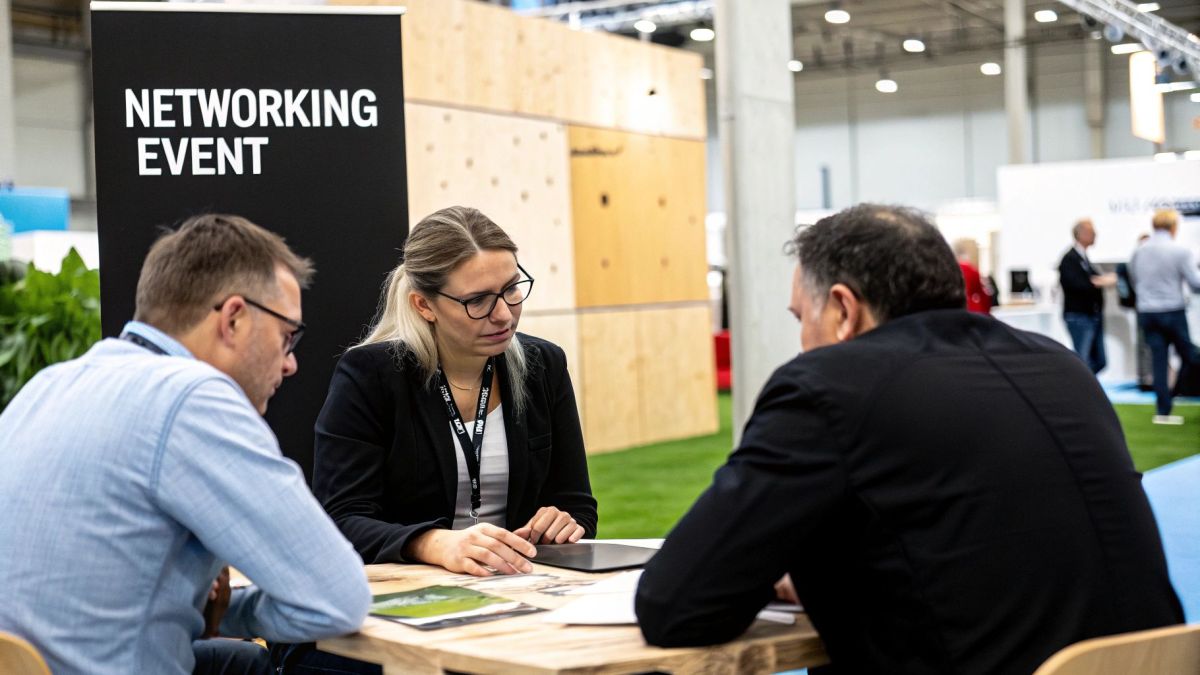
Let’s be honest. Many of us go to big events like the Commercial UAV Expo hoping to make game-changing connections, but we often head home with little more than a stack of business cards. If you want to avoid that trap, you need a plan. Networking isn’t about luck; it's about being strategic. A bit of prep work can turn a quick chat into a genuine, long-term partnership.
The best networking starts well before you even arrive at the convention centre. Your most valuable tool? The official event app. Dive into the attendee list and pinpoint the people, companies, or speakers you absolutely have to meet. Don’t just add them to a mental list—reach out and send a short, professional message to see if they have time for a quick chat.
This simple step flips the script entirely. Instead of wandering the floor hoping to run into someone important, you’ll walk in with a schedule of conversations that matter, making every minute count.
Turning Conversations into Connections
Once you’re on the ground, the real magic happens. Those casual moments—coffee breaks, post-session chats, evening receptions—are golden opportunities. Your goal isn't to launch into a sales pitch; it's to build a real connection. The easiest way to do that is by showing you’re genuinely interested.
Try one of these simple conversation starters:
- "What was your biggest takeaway from the keynote this morning?"
- "Which exhibitor has impressed you the most so far?"
- "What's the most interesting challenge you're trying to solve with drone technology right now?"
These open-ended questions get people talking and can quickly uncover shared interests or problems you might be able to help solve. To get the most out of these chats, it helps to know how to turn a good conversation into a real business opportunity. If you're looking to brush up on this, a Beginner's Guide to B2B Lead Generation offers a great place to start.
The Art of the Follow-Up
This is where most people drop the ball. A brief meeting is just the beginning; the follow-up is what cements the connection. Make it a rule to send a personalised email or LinkedIn message within 24 hours to everyone you had a worthwhile discussion with.
A simple follow-up that references a specific point from your conversation is 10 times more effective than a generic "nice to meet you" message. It shows you were actually listening and that you value their time.
Keep your message short and to the point. Remind them who you are, bring up something specific you talked about, and propose a clear next step. That could be anything from scheduling a proper call to sending over an article you think they'd find interesting. This simple gesture can turn a fleeting encounter into the start of a solid professional relationship.
In a fast-growing market, these connections are more important than ever. Australia's drone industry market size was roughly AUD 619.9 million in 2024, and it's forecast to explode to an estimated AUD 5.64 billion by 2034. That kind of growth means huge opportunities are on the table for those who build a strong network. With a thoughtful approach to networking, you can put yourself right at the centre of this exciting industry.
Got Questions About the Expo? We’ve Got Answers.
Heading to a big industry event like the Commercial UAV Expo can feel a little overwhelming, especially if it’s your first time. To make sure you’re ready to hit the ground running, we’ve put together answers to some of the most common questions we hear.
Think of this as your quick guide to getting the most out of your visit. A little planning beforehand means you can spend your time focusing on what really matters: soaking up new ideas, connecting with people, and getting your hands on the latest tech.
Who Should Be There?
First things first, this isn't a show for hobbyists. The Commercial UAV Expo is built from the ground up for professionals who use drones—or plan to use them—to get serious work done. It’s all about solving real-world problems with advanced aerial technology.
You’ll be in good company if you’re a:
- Project Manager in construction who needs a better eye on site progress and safety.
- Surveyor or GIS Pro hunting for the newest LiDAR and photogrammetry gear for precision mapping.
- Asset Inspector in the energy sector, tasked with keeping power lines, pipelines, and other critical infrastructure in top shape.
- Public Safety Officer using drones for everything from crash scene analysis to search and rescue.
- Farmer or Agronomist wanting to use aerial data to boost crop yields and make smarter decisions.
Essentially, if your job involves turning aerial data into better business outcomes, you need to be here. Drone service providers, engineers, and government folks will also find it invaluable.
How to Get Your Boss to Say Yes
Getting the trip approved usually boils down to showing a clear return on investment. You need to pitch this as an investment in the company’s future, not just an expense.
Start by pointing out how the technology on display can directly cut operational costs. For example, explain how a new drone sensor could slash inspection times by 50%, or how a new software platform could automate a process that eats up days of manual work. Don't forget to mention that the people you meet could become your next big client or partner.
A smart move is to highlight the benefits of local support and supply chains. Discussing why you should buy directly from a commercial UAV manufacturer can be a powerful argument, especially when it comes to reliability and long-term service.
Pro-tip: Offer to write up a detailed report when you get back. Promise to share key takeaways, new vendor contacts, and industry trends with the whole team. It shows you’re focused on bringing real value back to the business.
Which Pass Is Right for You?
The expo generally offers two main types of tickets, and the best one for you really depends on what you want to achieve. The main difference is your level of access to the educational content.
An Exhibit Hall Only pass is your key to the show floor. It’s the perfect choice if your main goal is to check out the latest gear, see live demos, and talk directly with vendors. If you're short on time and just need to find a specific piece of equipment, this is your best bet.
The full Conference Pass gives you all that, plus complete access to the educational program. This is where you’ll find the big-picture keynotes, deep-dive panel discussions, and technical workshops run by genuine industry leaders. If you want to get ahead of market trends and learn from the best in the business, the Conference Pass is absolutely worth it.
Getting Ready: Your First Few Steps
The difference between a frantic trip and a fantastic one is all in the prep work. A few simple steps before you go can make all the difference.
First, jump on the expo website and study the agenda and exhibitor list. Make a shortlist of the sessions you can’t miss and the booths you absolutely have to visit. Zero in on the speakers and companies that are tackling the exact problems you face in your day-to-day work.
Next, as soon as it’s released, download the official event app. Use it to find a few key people you’d like to meet and send them a message to schedule a quick coffee. Locking in a couple of meetings before you even land gives your schedule a solid anchor.
And most importantly, decide what a successful trip looks like for you. Do you need to find a new LiDAR sensor? Get clarity on BVLOS regulations? Meet three potential partners? Setting clear goals will keep you focused and ensure you walk away with everything you came for.
At Innoflight Technology, we build robust and reliable Australian-designed, USA- and Australian-manufactured drone solutions for the toughest commercial challenges. From high-precision surveying to critical infrastructure inspection, our platforms are engineered to perform.