At its heart, a farm automation system is like having an incredibly sharp and tireless assistant for your farm, one that works around the clock handling the repetitive, data-heavy jobs. This isn't about replacing farmers; it's about equipping them with powerful tools—think sensors, robots, and drones—to run a more efficient, profitable, and sustainable operation.
Understanding the Farm Automation System
Think of it as upgrading from a shed full of manual tools to an integrated command centre for your entire property. That’s the real shift a farm automation system brings. Instead of relying on guesswork, old habits, or a fixed calendar, these systems use a network of connected technologies to give you precise, real-time information.
This change allows farmers to stop simply reacting to problems and start managing their land proactively. For example, rather than spending hours walking the fields to check soil moisture, strategically placed sensors can automatically switch on the irrigation, delivering the perfect amount of water exactly where it's needed. It's this kind of data-driven thinking that helps solve some of modern farming's biggest headaches.
A New Era of Farming Efficiency
Bringing smart technology into agriculture isn't just a niche idea anymore; it's fast becoming a mainstream path to success. We're seeing a clear move away from purely traditional methods towards operations that blend experience with technology. In fact, a 2025 update on Australian agricultural technology found that 68% of Australian farms now use at least one type of smart device, which shows just how much the industry is embracing tech to meet modern challenges.
This widespread adoption is happening for good reason. The benefits are real and measurable:
- Better Productivity: Automated systems can work 24/7, from seeding and spraying to harvesting, without getting tired.
- Smarter Resource Use: Pinpoint accuracy in applying water, fertiliser, and pesticides cuts down on waste and significantly lowers running costs.
- Sharper Decision-Making: Having a constant stream of data offers deep insights into everything from crop health and livestock behaviour to how well your equipment is performing.
A farm automation system is the central nervous system of a modern farm. It links all the different pieces of technology into one smart, cohesive network that helps you fine-tune every process, from the paddock right through to the market.
Ultimately, these systems help turn farming from a purely labour-intensive job into a highly efficient, data-guided business, setting it up for long-term success and sustainability.
The Core Technologies Powering Modern Farms
To really get your head around a farm automation system, you need to lift the bonnet and see what makes it tick. This isn't science fiction; these are practical tools already at work on Australian farms, each playing its own part in a bigger, smarter operation. You can think of them as the brain, eyes, and muscles of modern agriculture.
At its heart, a smart farm is built on three key technologies that work together.
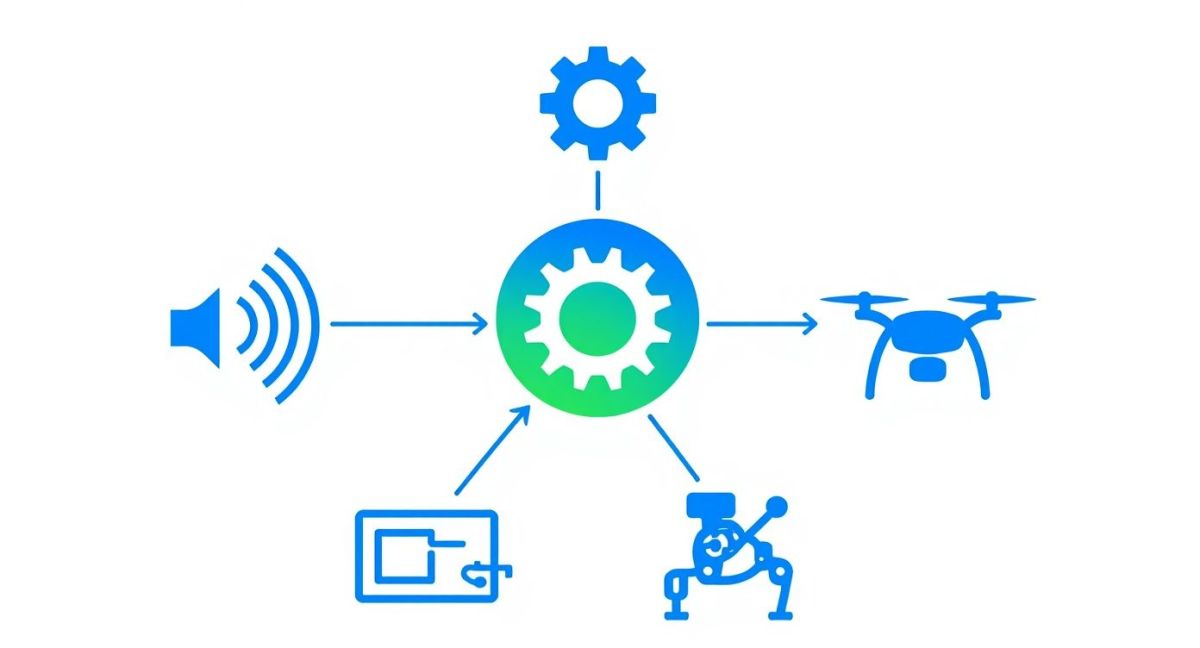
This image shows you how sensors, robotics, and drones all connect to form the foundation of a farm automation system. Grasping how these three pillars work is the first step to understanding how a truly modern farm operates.
Sensors and IoT Devices: The Digital Nervous System
Imagine knowing the exact soil moisture in a back paddock without leaving the house, or getting a text the second a water trough is nearly empty. That's the reality with Sensors and the Internet of Things (IoT). These little devices act as the farm's digital nervous system, constantly feeding you vital information from the soil, the air, and even your equipment.
They can measure everything from temperature and humidity to the nutrient levels in the ground. This data is then fired off wirelessly to a central hub, giving you a live dashboard of your entire property. It’s this constant stream of information that allows for smart, automated decisions—like switching on an irrigation system only when and where it's absolutely needed, saving a huge amount of water.
Drones: Your Eyes in the Sky
While sensors give you the boots-on-the-ground data, drones—or Uncrewed Aerial Systems (UAS)—provide that all-important bird's-eye view. Kitted out with sophisticated cameras and sensors, these machines can survey massive areas in minutes. It's a job that would take someone hours, if not days, to do on foot or a quad bike.
Drones are incredibly versatile tools on the farm. They can:
- Monitor Crop Health: Spot stressed or diseased plants well before the problem gets out of hand and spreads across the whole field.
- Create Detailed Maps: Generate precise 3D maps to help plan irrigation channels or analyse the lay of the land.
- Conduct Spot Spraying: Apply pesticides or fertilisers with pinpoint accuracy, which can slash chemical use by up to 90%.
The detailed aerial data from drones becomes even more powerful when paired with Geographic Information Systems (GIS), giving farmers a serious strategic advantage. You can learn more about how drones and GIS work together to create these invaluable insights.
Robotics and Autonomous Machinery: The Workforce
Finally, you have the "muscles" of the operation: robotics and autonomous machinery. These are the tools that get the physical jobs done. We're talking about everything from self-driving tractors that plant seeds with centimetre-level accuracy to robotic weeders that can pluck out a weed without touching the crop right beside it.
These automated machines aren’t just about replacing labour; they’re about doing jobs with a level of precision and consistency that people just can't match, all while running 24/7 without getting tired.
This shift towards automation doesn't stop at the paddock fence, either. To see the full picture, it's worth looking into how new technologies in farm building are also changing to house and support these advanced systems, creating smarter infrastructure from the ground up.
Real-World Gains from Farm Automation

Bringing a farm automation system onto your property isn’t just about working harder; it’s about working smarter. The advantages aren't just lines in a brochure—they’re real, measurable results that directly boost your efficiency, sharpen your resource use, and improve your bottom line.
Think about the immediate impact on day-to-day operations. Automated machines, like robotic harvesters or self-driving tractors, don't get tired. They can run 24/7, meaning crucial jobs like planting, spraying, or harvesting can happen in the ideal window, day or night. This massively increases your output while lessening the reliance on manual labour, which often accounts for over half a farm's total running costs.
Smarter Resource Management
Where farm automation truly shines is in how it manages vital inputs like water and fertiliser. Forget broad-acre application; we’re talking about surgical precision. Smart sensors and drones deliver resources exactly where they’re needed, and only where they're needed. This pinpoint accuracy saves you a significant amount of money and lightens your environmental footprint.
Precision irrigation is a perfect example. In Australia, where agriculture uses around 74% of the total water consumed, this is a huge deal. It’s no surprise the Aussie irrigation automation market, valued at USD 71.52 million in 2024, is expected to soar to USD 211.08 million by 2034. It's a clear response to the urgent need for smarter water management.
But this precise approach goes well beyond water:
- Targeted Fertilising: Soil sensors can pinpoint nutrient-poor patches, letting you apply fertiliser exactly where it will do the most good.
- Less Chemical Dependence: Robotic weeders can pull weeds by hand or apply tiny, targeted doses of herbicide, cutting chemical use by up to 90%.
- Better Fuel Economy: Autonomous tractors stick to the most efficient routes, which means less fuel burned and less soil compaction.
By giving crops and livestock precisely what they need, right when they need it, farm automation turns expensive inputs into profit. It's about eliminating waste and building a more resilient, profitable operation from the ground up.
The Power of Data-Driven Decisions
Maybe the biggest change is moving from reacting to problems to proactively managing your farm with hard data. The steady stream of information from sensors, drones, and machinery gives you a live, detailed picture of everything that’s happening.
This data helps you catch small issues before they blow up into major crises. For example, aerial imagery can spot crop stress or a pest outbreak days before you’d ever see it with the naked eye, giving you a critical head start. This kind of deep insight is a key benefit of precision agriculture with drones, turning raw information into smart, actionable steps.
Ultimately, this constant feedback loop helps you make better, more informed choices, improving your profitability season after season.
Farm Automation in Action Across Australia
Theory is one thing, but seeing how farm automation actually works on the ground is where its value really clicks. Across Australia, farmers are already using this technology to solve real-world problems, improve their bottom line, and farm more sustainably. This isn’t science fiction; it’s happening right now.
From the sprawling cattle stations up north to the carefully tended vineyards in the south, automation is proving its worth. The tech is incredibly adaptable, tackling challenges as different as mustering cattle, fine-tuning grape quality, and even helping protect the Great Barrier Reef.
Robotic Mustering in the Outback
Head out to remote Queensland and you’ll find that managing huge cattle stations is a tough, expensive job. One of the most impressive examples of automation out here is the SwagBot, a tough-as-nails, all-terrain robot built for mustering.
This robotic "farmhand" can handle rough country that would give a quad bike or a horse a hard time. It moves herds quietly and calmly, avoiding the high costs and animal stress that come with using helicopters. It’s a brilliant case of robotics stepping in to fill a critical labour shortage in a challenging environment.
Precision Viticulture in Wine Regions
Now, let's shift gears and visit a vineyard, where quality is everything. Drones have quickly become a must-have tool for winemakers. Fitted with multispectral sensors, they fly over the vines, gathering data on everything from the health of the leaves to the sugar levels in the grapes.
This detailed information lets growers pinpoint specific rows—or even single plants—that need a bit of extra attention. They can build incredibly precise ripeness maps, making sure every section is picked at the perfect moment. This kind of precision was just a dream a decade ago, and it’s leading directly to better wine and healthier profits.
These real-world applications show that automation isn’t a one-size-fits-all solution. It's a versatile toolkit that can be adapted to solve the unique operational challenges of any agricultural enterprise, from livestock to horticulture.
Let's take a quick look at how these technologies are making a tangible difference compared to older methods.
Automation Technology Impact Snapshot
| Farming Task | Traditional Method | Automated Solution | Key Improvement |
|---|---|---|---|
| Weeding | Manual labour or broad-acre spraying | Laser-guided robotic weeders | Makes weeding 85% faster and reduces herbicide use |
| Spraying | Tractor-mounted boom sprayers | Drone swarms with targeted nozzles | Cuts chemical drift by up to 70% |
| Harvesting | Manual picking, limited to daylight hours | Vision-guided robotic pickers | Enables continuous 24/7 harvesting operations |
As you can see, the improvements aren't just minor tweaks; they represent a fundamental shift in efficiency and precision. More details on these advancements can be found by exploring the latest research on agricultural service robotics.
Broadacre and Coastal Farming Innovations
This trend isn't limited to specialised farming. In large-scale grain operations, autonomous tractors are becoming more and more common. Guided by GPS, these machines can plant seeds, spread fertiliser, and harvest crops with centimetre-perfect accuracy, running day or night. This cuts down on overlap, saves a bundle on fuel, and gets the most out of every single square metre of land.
Even our precious coastal ecosystems are seeing the benefits. In Queensland's cane farming country, automated irrigation systems are helping to protect the Great Barrier Reef. By using soil moisture sensors and weather data to apply water only when and where it's truly needed, these systems dramatically reduce nutrient runoff into the local waterways. It’s a powerful reminder that a good farm automation system can help farmers be both profitable and fantastic custodians of the land.
Building Your Farm Automation Strategy

Diving into farm automation can feel like a massive undertaking, but a solid plan breaks it down into sensible, manageable steps. The trick is to resist the urge to do everything at once. A much better approach is to start by zeroing in on your biggest operational headaches.
What are the jobs that drain the most time, labour, or money? Maybe it’s the relentless fight against weeds, the daily grind of checking irrigation lines, or the sheer cost of spraying chemicals across vast paddocks. Pinpointing these high-impact areas gives you a clear, logical target for your first automation project. This focus ensures your initial investment solves a genuine, measurable problem from the get-go.
Start Small With a Pilot Project
Once you’ve identified your main challenge, the smartest move is to start small with a pilot project. Think of it as a trial run—a chance to learn the ropes of a new technology without the pressure of a full-scale, property-wide rollout. A pilot project lets you see the benefits firsthand and figure out how the system actually works in your unique environment.
For example, you could start with a handful of IoT soil sensors in just one paddock to get your irrigation scheduling just right. Another great starting point is to use a single drone to monitor the health of a specific high-value crop. Looking into the best drones for farming can help you find a model that delivers valuable data without breaking the bank.
This gradual approach has some clear advantages:
- Lower Initial Cost: You can test the technology with a much smaller financial commitment.
- Faster Learning Curve: It’s far easier to get your head around one new tool than a whole suite of interconnected systems.
- Clear ROI: You can directly measure the impact on one specific task, making it easy to see the return on your investment.
Address the Practicalities Early
Before you start buying equipment, it’s absolutely essential to look at the practical side of things. What infrastructure do you need to support your new tech? One of the biggest hurdles, particularly in rural Australia, is simply getting a reliable internet connection. So many of these automated tools need a steady signal to send and receive data.
A classic mistake is buying sophisticated gear before checking the local internet and mobile coverage. It pays to talk to providers and run some tests on your property to make sure your new system will have the connection it needs to work.
Finally, you need to think about the return on investment (ROI). Automation isn't just an expense; it's an investment in the future of your operation. Do the maths. Tally up the potential savings in labour, water, fuel, and chemicals, and weigh them against the upfront cost of the equipment. Having clear financial projections helps justify the spend and sets realistic expectations for how long it will take to see a real return. This sort of methodical planning takes the mystery out of the process, giving you a clear, actionable roadmap to successfully bring automation to your farm.
The Future of Automated Farming
So, where is all this technology headed? We're on the verge of some truly next-level developments in agricultural automation, pushing towards a future of smart, connected, and even self-sufficient farming. The next big step is the idea of a fully autonomous operation—sometimes called a 'dark farm'—that can run itself day and night with almost no human input.
Think about a single, unified platform that doesn't just automate tasks, but automates decisions. This system would use artificial intelligence to scan satellite imagery, spotting the early signs of a pest outbreak weeks before it happens. Instead of reacting with broad spraying, you could be proactive with incredibly precise treatments. It’s a huge leap from simply replacing labour to creating genuine intelligence on the farm.
Towards a More Resilient Future
This next wave is all about building a single, cohesive ecosystem on your property. Imagine your irrigation system talking directly to live weather forecasts, or your scouting drones giving instructions to ground-based robots for targeted weeding. Your entire operation could be fine-tuned in real-time to squeeze out every drop of potential while cutting down on waste.
The ultimate goal here is to build a more resilient, profitable, and sustainable agricultural sector. By embracing these advancements, we can meet growing global food demands while protecting our natural resources.
Looking ahead, farm automation is becoming essential for making large-scale sustainable farming practices a reality. It's how we'll reduce our environmental footprint and boost productivity at the same time. These technologies aren't just fancy gadgets; they're the building blocks for the next generation of farming, giving producers the tools they need to thrive in an ever-changing world.
Frequently Asked Questions
Diving into farm automation naturally brings up a few practical questions. It’s smart to get your head around the costs, ease of use, and potential roadblocks before you make any decisions for your property.
How Much Does a Farm Automation System Cost?
That’s a bit like asking how much a ute costs—it really depends on what you need it to do. You don't have to spend a fortune to get started.
You can dip your toes in the water with a few simple IoT sensors to monitor soil moisture or tank levels for just a few hundred dollars. Honestly, this is the best place for most people to start.
Of course, if you’re looking at the top end of town, things like autonomous tractors or robotic harvesters are a major capital investment, and you could be looking at hundreds of thousands. The trick is to identify one specific problem you want to solve, start there, and then scale up as you see the system paying for itself.
Do I Need to Be a Tech Whiz to Use These Systems?
Absolutely not. The technology working in the background might be complex, but the part you interact with is designed for farmers, not software developers. Most modern systems have straightforward dashboards you can pull up on a tablet or your phone.
Think of it like your banking app—you don’t need to know how the code works to see your account balance. These platforms take all that complex data and serve it up in simple charts and alerts. Plus, any decent company will provide proper training and support to make sure you're comfortable from day one.
A good farm automation system should make your life easier, not give you a technical headache. The best ones are powerful on the inside but simple to use on the outside, putting data-driven farming within everyone's reach.
What’s the Biggest Hurdle to Getting Started?
For many farms, especially out in rural Australia, the biggest challenge is simply internet connectivity. A lot of this gear needs a stable connection to send and receive information, so checking the coverage across your property is a must-do first step.
The other big one is the initial investment. While these systems are proven to deliver a solid return over time, the upfront cost can be a barrier. A great way around this is to start with a small, focused pilot project. Prove the value on a smaller scale before you go all-in on a property-wide rollout.
Ready to see how getting a clear view from above can kickstart your automation journey? Innoflight International specialises in advanced drone and sensor solutions built for the demands of Australian agriculture. Our tech can deliver the data you need to make smarter, more profitable decisions on the ground.
Discover your ideal drone solution at https://evolutionflight.com.